Tuesday, February 17, 2015

Blog 16: Answer 2

1.  What is your EQ?
  • What is the most important aspect of television production in order to influence viewer emotion?
2.  What is your first answer? (In complete thesis statement format)
  • The most important aspect of television production in order to influence emotion is camera shots.
3.  What is your second answer? (In complete thesis statement format)
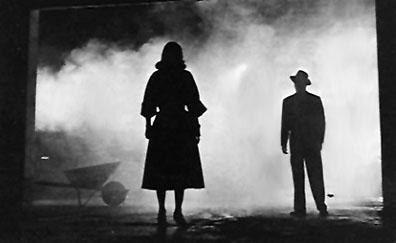
  • When working within the field of television production, another way to influence viewer emotion is through lighting. 
4.  List three reasons your answer is true with a real-world application for each.
  • Lighting is used to illuminate the setting (Real world: You are able to see where you are going when walking home or just doing everyday things. Through this you are able to capture emotion from everyday things.)
  • Suggest time, age, & wealth (Real world: When you go out and watch a movie and it's still in black and white your first instinct is that it is either a flashback or its old.)
  • Prop (Real world: When you are camping and have to go to the restroom so you use a light to guide you.) 
5.  What printed source best supports your answer?
  • Role of Lighting in Creating Mood and Emotion by Murali Basa.
6.  What other source supports your answer?
  • Using Light to Create Emotion by Alison Sky Richards.
7.  Tie this together with a  concluding thought.
  • Overall light is something we use everyday to allows us to see things, whether it be natural or artificial it is still useful. In the area of TV it allows for different emotions to be portrayed.

Wednesday, February 11, 2015

Blog 15: Independent Component 2 Approval

1.  Describe in detail what you plan to do for your 30 hours.
  • For my 30 hours I plan to watch a variety of TV shows and analyze the different ways that they (production team) try to create emotion. I will also be documenting all of my information on a Google docs so that I am able to look back upon it and see how different genres of shows created emotion.
2.  Discuss how or what you will do to meet the expectation of showing 30 hours of evidence.
  • I will show evidence of my work by documenting it on a Google docs as well as taking pictures of what I am doing, in this case watching a variety of TV shows.    
3.  Explain how this component will help you explore your topic in more depth.
  • This component will help me explore my topic into more depth because it gives me an opportunity to analyze the small details that we don't really focus on when watching TV. 
4.  Post a log in your Senior Project Hours link and label it "Independent Component 2" log.


Thursday, February 5, 2015

Blog 14: Independent Component 1

LITERAL

(a) Write: “I,Gicelle Alarcon, affirm that I completed my independent component which represents 31 hours of work.”

(b) Cite your source regarding who or what article or book helped you complete the independent component.
  • Sheridan, Sherri. "Designing Camera Shots." Peachpit: Publishers of Technology Books, EBooks, and Videos for Creative People. N.p., 23 Apr. 2004. Web. 11 Dec. 2014.
  • My Mentor: Edgar Avendano 
(c) Update your hours in your Senior Project Hours link. Make sure it is clearly labeled with hours for individual sessions as well as total hours.

(d) Explain what you completed.    
  • Throughout the course of my independent component I did 31 extra hours of mentorship which involved planning out shows, going to events, filming shows, and just running errands that my mentor needed.

INTERPRETIVE 


APPLIED
  • How did the component help you understand the foundation of your topic better?  


  • This component helped me better understand my topic by introducing me to different things. One of the things that I was introduced to was scheduling which there is an example of above. With this I was able to understand how they where able to run all the shows and have everything go up on time. Apart from scheduling you actually had to put the shows on a program which is called fork and that program allows you to view the shows on TV. Another thing I learned that helped me better understand my topic was pre editing. This is when you rough edit a show in order for it to fit into the time slots on the TV show schedule. When doing this you primary leave in just the main content and you take out what is not necessary. This component helped me better understand my topic in the sense that there is so much that goes on within TV production and that it is not just the filming.

Wednesday, January 28, 2015

Extra Blog: January

For this extra blog I am going to be speaking of different ways that lighting affects a scene.(:

Emotionally Neutral Lighting

  • This type of lighting is commonly seen used within news broadcast or game shows. This lighting tends to cast very few shadows and makes the whole scene seem bright and happy at the same time. 


Dramatic/Serious Lighting 

  • This type of lighting is used when trying to achieve/ highlight an important scene. Is is commonly seen withing really important scenes. This usually implies that the actors are speaking of something very important. 


High Intensity Lighting

  • This introduces a style of lighting called cameo. This creates a feeling of high drama as well as intensity of mood. This can also imply deep love or deep terror within a scene. Without having the reference points of the walls your audience has the capability of being drawn closer to the talent which creates a bond.


Blog 13: Lesson 2 Reflection

1.What are you most proud of in your Lesson 2 Presentation and why?
  • I am most proud of the fact that I had pretty good content within my PowerPoint and was able to explain it all.
2. a. What assessment would you give yourself on your Lesson 2 Presentation (self-assessment)?
      AE       P          AP       CR       NC


    b. Explain why you deserve that grade using evidence from the Lesson 2 component contract.

  • I gave myself this grade because all though my presentation was good my activity didn't come out the way I would have liked it to.
3. What worked for you in your Lesson 2?
  • I was able to meet time. I added many slides to my PowerPoint due to the fact that I speak quickly which helped.
4. What didn't work? If you had a time machine, what would you have done differently to improve your Lesson 2?
  • I would go back and really think my activity through. It made sense in my head but I just didn't know how to execute it correctly.
5. What do you think your answer #2 is going to be?
  • My answer to will most likely have something to do with either sound or lighting.

Thursday, January 8, 2015

Blog 12: Mentorship 10 hours check

1.   Where are you doing your mentorship?
  • I am doing my mentorship at Guadalupe Radio/TV.
2.   Who is your contact?
  • My contact is Edgar Avendano. 
3.   How many total hours have you done (total hours should be reflected in your mentorship log located on the right hand side of your blog like your WB)?
  • I have done a total of 25 hours as of now.
4.   Summarize the 10 hours of service you did.
  • A lot of my hours have came from doing events which is when we tend to get really busy because we are broadcasting live. When we are not doing events I help out at the station and help them with whatever is needed while they film a TV show.

Monday, January 5, 2015

Blog 11: Holiday Project Update

1.  It is important to consistently work on your senior project, whether it is break or we are in school.  What did you do over the break with your senior project?


  • Yes it is important to consistently work on my senior project no matter the circumstances. Over break we primarily spent the time getting things ready for Christmas.   


  • 2.  What was the most important thing you learned from what you did, and why?  What was the source of what you learned?
    • The most important thing that I learned was that you are not always working just to help yourself but to help others as well. I learned this because since I mentor at a catholic radio/TV station there were plenty of people donating different things like food and clothing so that we can take them to Mexico for the people in need. 
    3.  If you were going to do a 10 question interview on questions related to answers for your EQ, who would you talk to and why?


  • I would talk to one of the guys that works at the station because he also works on different projects outside of work.